Patrick Emmenegger is Professor of Political Science (Comparative Political Economy and Public Policy) at the School of Economics and Political Science, University of St.Gallen. For more information, see the list of publications, the CV, and the CPE research team.
-
-
New paper in Sociology of Education
Great news. Sociology of Education just accepted our new paper “Caught in a Downward Spiral? The Relative Attractiveness Deficit of Vocational Education and Training” (with Matthias Haslberger and Anna Wilson). Here is the abstract:
Vocational education and training (VET) is hailed for easing skill shortages and fostering inclusion. However, little is known about the factors influencing the choice between VET and general education. We conducted a vignette experiment with over 11,500 respondents in seven European countries, asking them to assign fictitious 15-year-olds either to VET or general education based on achievement, motivation and sociodemographic profiles. Respondents consistently channeled students with low grades and motivation into VET. This bias weakened, but persisted, among respondents who view VET as offering favorable labor-market prospects. Boys, working-class youth and adolescents outside large cities were also steered towards VET, although achievement effects outweighed ascriptive ones. These patterns hold across countries and respondent subgroups, indicating that VET is widely perceived as the less desirable educational pathway. Our findings suggest that VET is caught in a downward spiral in which the relative unattractiveness of VET and academic drift reinforce each other.
-
Out now: The Party Politics of Electoral System Choice
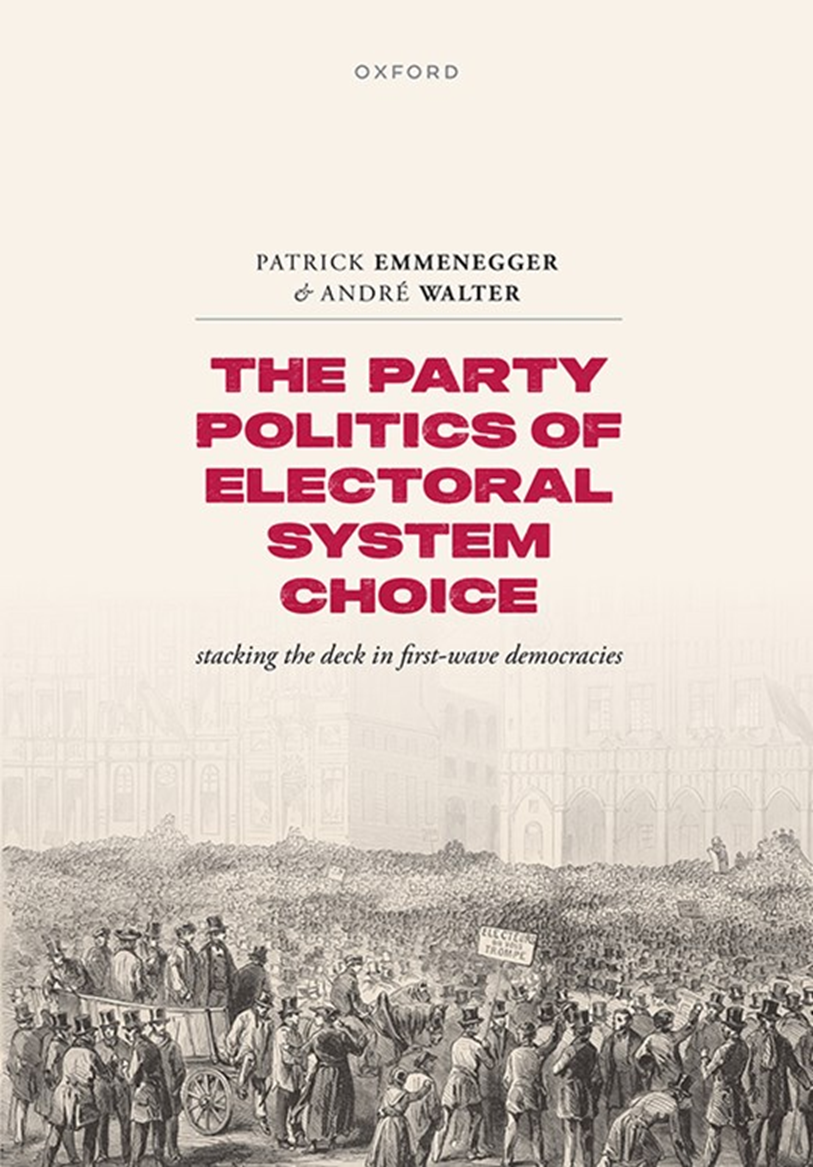
The book “The Party Politics of Electoral System Choice: Stacking the Deck in First-Wave Democracies” (with André Walter) is now appeared with Oxford University Press. The book is open access and can be read here: LINK. The book will appear in print in February 2026.
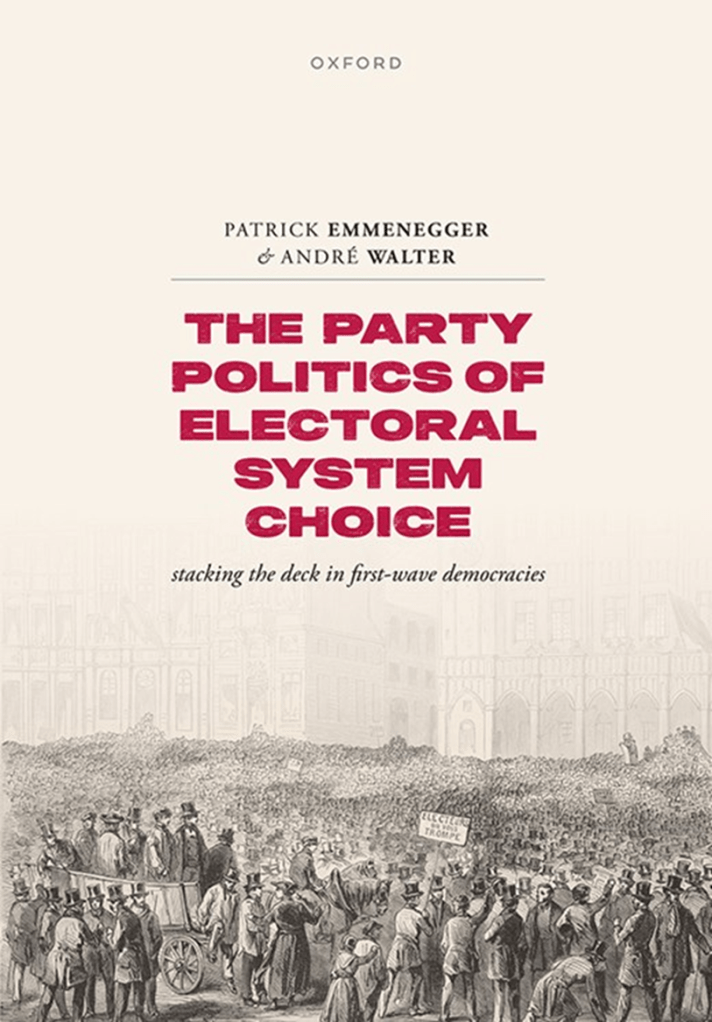
The Party Politics of Electoral System Choice explores the strategic manipulation of electoral systems by political actors to maintain power. It delves into how electoral systems are more than mere governance tools; they are pivotal instruments that shape power dynamics. The book shows that the choice of an electoral system is one of the most consequential decisions in any democracy. The authors develop a ‘neo-Rokkanian’ theory of electoral system choice, arguing that incumbent parties try to contain electoral threats through district design and electoral alliances. When successful, incumbent parties resist electoral reform. However, this strategy leads to growing seat-vote distortions, which is why disadvantaged parties demand proportional representation. In the absence of any exogenous shock, however, disadvantaged parties will struggle to overcome the incumbent parties’ resistance to electoral reform. If incumbent parties cannot resort to containment measures, for example because the electoral geography is not suitable, they support the adoption of proportional representation. In this response, incumbent parties opt for a more inclusive electoral system that allows them to limit their seat losses in the face of a rapidly growing electoral threat that they cannot neutralize. Through a comprehensive analysis of first-wave democracies and a combination of quantitative and qualitative methods, the authors reveal the broader patterns of strategic behaviour of political actors seeking to optimize their positions through electoral reform. This comprehensive study is essential for understanding the politics of electoral system choice, offering new insights into electoral geography, district design, electoral alliances, and party preferences for electoral reform.
-
New paper in the Journal of European Public Policy
A great to start the year (or rather, to end the old one). The Journal of European Public Policy has accepted our new paper “What Skills for the Future? The Knowledge Economy as a Coalition Magnet” (together with Martin B. Carstensen and Cecilia Ivardi) for publication. Below is the abstract:
Enhancing economic competitiveness in the knowledge economy requires policies that align workforce skills with emerging demands. This paper examines the discursive battle over the skills of the future and argues that the idea of the knowledge economy works as a ‘coalition magnet.’ Policymakers use the ‘knowledge economy’ flexibly together with ideas about skill needs and social inclusion to assemble political coalitions that support distinct interpretations of the knowledge economy that vary over time and cross-nationally. We conduct a discourse network analysis, examining data from newspapers over the period 2005-2022. We find that in Denmark and Germany, high and general skill needs are a magnet for social inclusion ideas, fostering a discourse focused on a ‘social’ view of the knowledge economy. In contrast, in France and the UK, the high and general skill needs are a magnet for ideas related to otherskill concerns, particularly concerning mid-skilled workers. These combinations are driven by different actor constellations: private actors in Denmark and the UK, and the state in France and Germany, usethe knowledge economy as a coalition magnet.
-
Call for applications: 3 PhD students (100%, up to five years)
The Department of Political Science at the University of St.Gallen is looking for 3 PhD Students (100%, up to five years). The successful candidates are expected to pursue a PhD degree in political science with the DIA program at the University of St.Gallen connected to the international research project GOVPET led by Prof. Patrick Emmenegger.
The research project: GOVPET is concerned with how skill formation, labor markets, and modern economies more generally adapt to the challenges associated with technological change and the eco-social transition in a context of skill shortage and climate change. The project takes a comparative approach and studies Switzerland as well as other advanced democracies in international comparisons. For more information on GOVPET, please visit www.govpet.ch. For more information on Prof. Emmenegger, please visit www.pemmenegger.com.
Your qualifications: Applicants are expected to hold a MA/MSc degree in political science or related relevant disciplines. They should demonstrate the ability and motivation to pursue an academic career. The positions presuppose an interest in theory-driven empirical research on topics such as the political economy of skill formation, the politics of innovation and knowledge-based growth, and the effects of technology and the eco-social transition on modern economies with a particular focus on skills. Applicants should have excellent training in social science methodology. A good command of English, both spoken and written, is expected. Additional knowledge of one of Switzerland’s main languages is an advantage.
What we offer: The three positions start in July 2026 (or upon agreement) and are for a period of up to five years. The positions are full time (100%). The salary aligns with the directives of the University of St.Gallen and amounts to about 61,000 CHF in the first year. Within the confines of the overall project, the successful applicants will have freedom to develop their own independent research. Next to research and coursework according to the regulations of the PhD program, the doctoral researchers are expected to join the research team’s activities such as the annual doctoral workshops and the regular meetings with the prestigious academic advisory board. The positions offer opportunities to pursue further training (e.g. methods schools) and to attend scientific conferences.
Application procedure: Applicants should send their full application (in English), including cover letter, curriculum vitae, examples of their academic work (e.g., their MA dissertation or seminar papers), and copies of relevant certificates, to Prof. Patrick Emmenegger (patrick.emmenegger@unisg.ch) no later than January 31, 2026. For further inquiry, please send an email to Prof. Patrick Emmenegger.
-
New paper in Regulation & Governance
Great news. The paper “Meeting the Twin Challenge in Times of Labor Shortage: How Modern Societies Promote Future Skills for the Digital and Green Transitions” (together with Martin B. Carstensen, Niccolo Durazzi, and Jane Gingrich) has just been accepted for publication in Regulation & Governance. It is the introduction to our upcoming special issue. Below is the abstract of the paper:
The twin transition to a digital and green economy has placed skill formation at the center of efforts to sustain competitiveness. Reforming skill formation systems poses enduring dilemmas on how to balance concerns about economic efficiency with social inclusion while securing employer commitment. The context of significant uncertainty brought on by the twin transition – placed at all levels, from individuals to firms to the state – amplifies the challenge of building effective skills ecosystems. We argue that the central question is no longer about whether governments should intervene but instead about how to govern skill formation under profound uncertainty. The task is to design institutions that are flexible enough to adapt to shifting technological and ecological demands while stable enough to sustain political coalitions and social inclusion. We argue that effective skills ecosystems for the twin transition must combine political stability with the capacity to embrace – rather than reduce – economic uncertainty.
-
Successful PhD defenses: Andreina, Cecilia, Linda, and Scherwin
Over the last months, several members of the CPE@HSG team have successfully defended their dissertations. Major congratulations to Linda Wanklin (December 2024), Andreina Thoma (April 2025), Cecilia Ivardi (June 2025), and Scherwin Bajka (September 2025) for these huge achievements. Andreina is now a postdoc at the University of Luxembourg, whereas Scherwin will start as a postdoc at the Swiss Federal University of Vocational Education and Training in January. Cecilia and Linda will continue as postdocs at the University of St.Gallen (and as part of GOVPET).
-
Congratulations to Alina Felder-Stindt
For several years, Alina has been a key part of the GOVPET research team at the University of St.Gallen and of CPE@HSG. Now it is time for a new chapter. In September 2025, Alina Felder-Stindt started her new position as assistant professor at the University Pompeu Fabra. Major congratulations to this fantastic achievement. On behalf of the entire research group, we wish her nothing but the best.
-
Forthcoming paper in Journal of European Social Policy
Excellent news. The Journal of European Social Policy just accepted our paper entitled “Yesterday’s Model for Tomorrow’s Economy? Dual VET and Wage Inequality in the Knowledge Economy” (co-authored with Matthias Haslberger). Here is the abstract:
Dual vocational education and training (VET) is said to have positive economic effects. However, recent contributions suggest that the rise of the knowledge economy may undermine these positive effects because university-educated workers are better suited for the new knowledge-intensive jobs. This paper provides the first evidence on the relationship between dual VET and wage inequality in mature knowledge economies. Using a new dataset on 37 advanced economies from 1996 to 2020, we find that dual VET is associated with lower levels of wage inequality. This negative association is particularly strong in the lower half of the wage distribution, which suggests that academically weaker students are the main beneficiaries of dual VET. Using three different indicators of the knowledge economy, we find, contrary to the fears often espoused in the literature, no clear evidence that the knowledge economy erodes this negative association between dual VET and wage inequality.
-
Another new paper in Regulation and Governance
Glad to write that another paper has been accepted by Regulation and Governance for publication. The paper entitled “Re-skilling in the age of skill shortage: Adult education rather than active labour market policy” (co-authored with Giuliano Bonoli and Alina Felder-Stindt) is also part of the special issue on meeting the twin challenge in times of labor shortage. Here is the abstract:
European economies face the task of providing the necessary skills for the ‘twin transition’ in a period of skill shortage. As a result, we may expect countries to reorient their labour market policy towards re-skilling. We look for evidence of a reorientation in two relevant policy fields: active labour market policy (ALMP) and adult education (AE). We explore general trends in both fields based on quantitative indicators and compare recent policy developments in four countries with strong ALMP and AE sectors: Denmark, France, Germany and Sweden. We do not observe clear evidence of a general movement away from activation and toward re-skilling in ALMP. However, in AE, we identify several re-skilling initiatives that address skill shortages. Relying on insights from queuing theories of hiring and training, we argue that due to changes in the population targeted by ALMP, the locus of re-skilling policy is increasingly moving towards AE.
-
New paper in Regulation and Governance
Great news from Regulation & Governance. The paper entitled “Problems and Solutions in the Knowledge Economy: Ideational Power in Slow-Burning Crises” and co-authored with Martin B. Carstensen and Cecilia Ivardi has been accepted for publication. Here is the abstract:
Societies are grappling with uncertainty about how to adapt to the emerging knowledge economy. Drawing on the public policy literature, we propose a new approach to studying the politics of ideas during long-term structural changes. We depart from existing scholarship that focuses on the politics of ideas during episodic crises, and instead focus on ideas that develop gradually in the context of ‘slow-burning’ crises, using the example of the knowledge economy. In slow-burning crises, the processes of defining problems and identifying solutions unfold over different timeframes and lead to variation in coalition building because they involve a diverse set of actors promoting ideas at different levels of abstraction. Our cross-national quantitative analysis of national public debates shows that employers act as key problem brokers, proposing problem diagnoses that focus on efficiency challenges. In contrast, the actors proposing solutions are more diverse, promoting ideas centered on inclusion and governance.
 Patrick Emmenegger